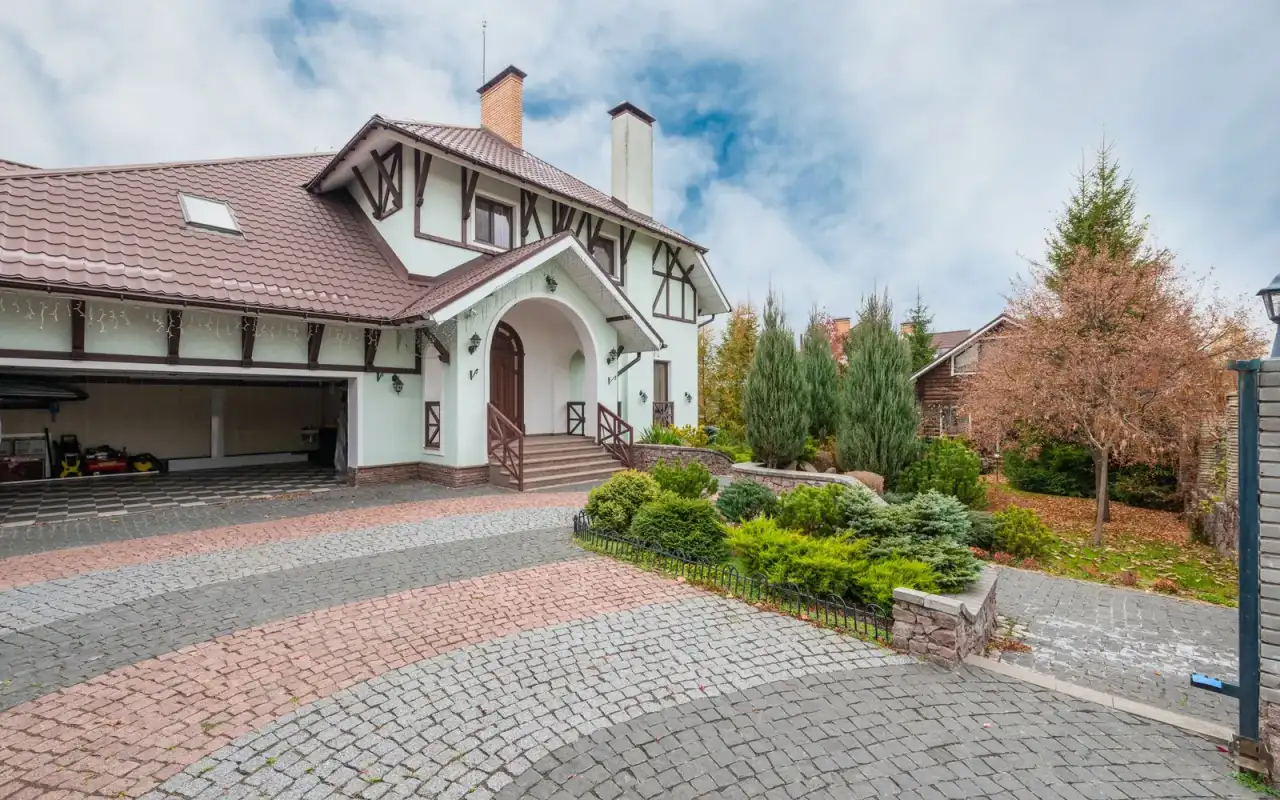
Slope first, color second
Deltona is hilly for Florida, especially compared with a beachside pad. The city's driveway and lot-grading guidelines say a residential driveway should not exceed a 15 percent grade. Steeper drives are to be designed by a civil engineer registered in Florida. The same guide lists a minimum profile grade of 0.3 percent, so a dead-flat pour that ponds is also outside the sheet. Single-driveway widths are listed at 12 to 14 feet with curb cuts of 20 to 24 feet. Double-driveway widths are listed at 16 to 24 feet with curb cuts of 24 to 34 feet. Those are published ranges. Your plot still has to match them.
Fifteen percent is steep to walk when it is wet. If the garage sits well above the crown of the road, do the math before you fall in love with a pattern. Rise divided by run is the grade. If that number is over the guide's maximum, the next call is an engineer, not a paver catalog. The permit row links the guide and the exhibit.
The exhibit that refuses pavers in the public strip
An adopted city exhibit on driveway expansions, read from the Legistar copy linked on this page, says a building permit is required when impervious materials or extra parking are added on a residential lot. It caps a driveway, including an expansion, at 24 feet wide. It says a driveway may not cover more than 40 percent of the front yard, may not extend into the side-yard setback, and may not interfere with the swale. It says there shall be no pavers in the right of way, and that a required apron is 6-inch concrete no wider than 24 feet.
That is the opposite of Daytona Beach, which licenses pavers in the strip, and it is not Port Orange's limerock detail. Quote the city on the deed. The city's right-of-way use permit form can also attach special conditions for drainage and concrete. Forms live on the permitting page. Confirm the exhibit is still the code section in force. This page is a reading of the published exhibit, not a certification that no later ordinance changed a word.
| Limit | Where it was read |
|---|---|
| Maximum residential grade 15 percent, engineer if steeper | Grading guide |
| Minimum profile grade 0.3 percent | Grading guide |
| Single drive 12 to 14 feet, curb cut 20 to 24 feet | Grading guide |
| Double drive 16 to 24 feet, curb cut 24 to 34 feet | Grading guide |
| No pavers in the right of way | Adopted exhibit |
| Apron described as 6-inch concrete, no wider than 24 feet | Adopted exhibit |
| Driveway, including expansion, max 24 feet and max 40 percent of the front yard | Adopted exhibit |
A paver field that stops at a concrete apron
If the exhibit still governs, the usual honest design is pavers on the private side and a concrete apron in the public strip. The joint between those materials needs an edge that does not rock when a tire hits it. Tell the installer the apron is concrete because the city said so, not because concrete was cheaper that week. A quote that paves through the curb in Deltona is quoting a city this exhibit does not describe.
The 40 percent front-yard cap and the 24-foot width cap are how expansions get refused. A circular motor court that eats the front yard fails even if the pavers are beautiful. Sketch the percentage before you sketch the border. Side-yard setbacks and the swale are on the same exhibit. Filling a swale to gain a parking pad pushes water at the neighbor and at the road, which is the interference the exhibit names.
What the national bands do and do not include
Angi's 2026 standard band of $10 to $18 per square foot is for the paver field. A 600 square foot private drive is about $6,000 to $10,800 before haul-away. The concrete apron is not inside that multiplication. Price it as concrete, using Angi's 2026 concrete driveway context only as a hint: broom finish is published around $8 to $12 per square foot, and a small apron will not behave like a full driveway unit price. Engineering, if the grade exceeds 15 percent, is another invoice.
West Volusia higher ground is where better-drained Tavares sands are described, next to wetter flatwoods. Deltona has both within a short drive. A lot that drains is not permission to skip compaction. A lot that holds water still cannot use the beach cities' paver-apron trick. The exhibit is the local rule. Soil explains settlement. It does not rewrite the exhibit.
Checklist
- Compute the grade from the garage to the road. Over 15 percent means an engineer, per the guide.
- Keep at least a 0.3 percent profile so the drive does not pond, per the same guide.
- Stay inside the width and curb-cut ranges, and inside 24 feet and 40 percent of the front yard if the exhibit still applies.
- Plan pavers on the lot and a 6-inch concrete apron in the right of way, unless a newer code section says otherwise.
- Do not fill the swale or enter the side-yard setback.
- Pull the building permit when you add impervious area or parking. The exhibit says the permit is required.
- Ask the permitting desk to confirm the exhibit before you buy pavers for the strip.
Daytona Pavers is a free matching service for homeowners who want an independent installer. We do not grade lots and we do not claim a Deltona project count.
Last updated November 1, 2026.
Sources
- City of Deltona, driveway and lot grading guidelines
- City of Deltona ordinance exhibit on driveway expansions (Legistar copy of the adopted exhibit)
- City of Deltona permitting forms
- City of Deltona, right-of-way use permit form
- Angi, How Much Does a Paver Driveway Cost? (2026 data, updated Oct 15, 2026)
- Wikidata, Deltona, Florida (Q1898798)
Last checked November 1, 2026. Ranges are national or publisher typical figures, not quotes.
Parent pages
-
-
- Permit row Official links for this place in the permit guide.
- Cost calculator National published bands. Not a quote.
-
Deltona driveway questions
What is the steepest residential driveway Deltona describes?
The grading guide says the grade should not exceed 15 percent. Steeper work is to be designed by a civil engineer registered in Florida. A minimum profile grade of 0.3 percent is also listed.
Can the apron be pavers?
The adopted exhibit that was read says there shall be no pavers in the right of way and describes a 6-inch concrete apron no wider than 24 feet. Confirm the current code before you order, in case it changed after this check.
How wide can the drive be?
The grading guide lists single widths of 12 to 14 feet and double widths of 16 to 24 feet, with curb-cut ranges beside them. The exhibit caps a driveway, including an expansion, at 24 feet and at 40 percent of the front yard.
Does a paver price include the concrete apron?
Not in Angi's per-foot paver band. Ask for the apron as concrete, separate from the private paver field.
Is Deltona on the county hold harmless?
No. Deltona is an incorporated city with its own guide, exhibit, and right-of-way form. County paperwork is for unincorporated addresses.
Who installs the driveway?
An independent local installer, if you hire them. Daytona Pavers only introduces you. We are not a contractor.
Request a Deltona driveway quote
Daytona Pavers is a free service that connects homeowners with local, independent paver installers. It is not itself the contractor. Your request is shared with a local installer so they can contact you with a quote.
Tell us about the project. We pass the request to a local, independent installer. You do not pay Daytona Pavers for the introduction, and you decide whether to hire anyone.
A budget range is optional. It is a planning hint, not a promise. Read how we handle this information on the privacy page.