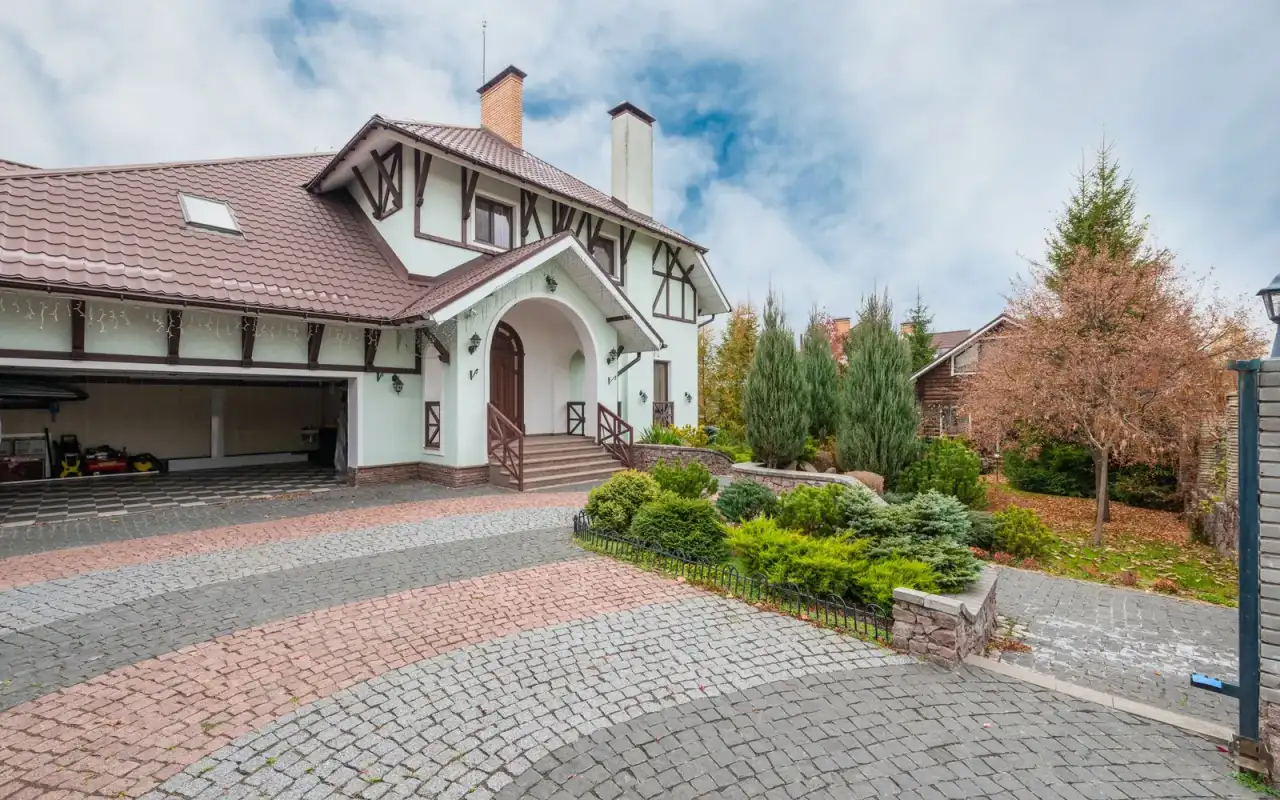
What you are looking at
A sunken paver driveway usually shows up in the tire paths, along the edge, or in a low spot that holds water after a thunderstorm. The units themselves are often intact. The sand under them left. Around a pool, the same pattern shows up where a deck drain was skipped or a cage footer intercepted the base. Patio sinks tend to follow a downspout or an oak root. The location tells you more than the brand stamped on the paver.
Volusia's failure mode is washout and settlement. Freeze-thaw heave is the story in colder states. It is not the usual story here. Hurricane season runs June 1 through November 30, and the hard afternoon rains sit inside that window. A base that was loose on day one finds the gap during the first wet summer.
The soil under the job
The USDA official series description for Myakka, Florida's classic flatwoods soil, says these soils are poorly or very poorly drained sands. The water table is at depths of less than 18 inches for 1 to 4 months in most years and drops below 40 inches in very dry seasons. Depressional spots can hold standing water for months. The same page says Tavares soils on higher ground are moderately well drained. Deltona and DeLand have more of that higher ground. Edgewater, the barrier island, and low lots near canals have more of the wet kind. Your lot is a hole in the ground, not a county average. Ask the installer to describe what they find, including whether the excavation fills with water.
Port Orange's apron detail is the local illustration of why the water table matters. Limerock or crushed-concrete base is allowed only where the subgrade is at least 6 inches above the seasonal high water table. Below that, the city calls for soil cement, or for concrete regardless of the water table. A crew that copies a dry-lot base into a wet swale is building the sink you will see next July. That detail is for the city's right-of-way apron. It is still the right question on the private side: what base is allowed when the bottom of the hole is wet?
Edges, downspouts, and roots
Edge restraint is what keeps the field from walking into the lawn. When the edge fails, the border sinks first and the field follows. Plastic edge is common inland. Close to the ocean, metal that rusts becomes a broken edge. Downspouts that dump on the field mine the bedding sand. A root under a DeLand walk will lift one side and drop the other. None of those are fixed with a sealer.
Reset or replace
Angi lists minor paver repairs, such as replacing a few units, at $200 to $500, and more extensive resetting or drainage repairs at $1,000 to $2,500. Those are national totals from the 2026 driveway page, not a per-square-foot Volusia menu. If the sunken area is a corner and the rest of the field is tight, a reset can be the whole job. If tire paths have dropped the length of the drive, price a new driveway beside the repair. Standard new work is $10 to $18 per sq ft nationally, about $6,000 to $10,800 for 600 square feet, before haul-away.
- Photograph the low spot after a rain so the installer sees the water, not a dry afternoon.
- Ask whether they will lift the units and rebuild the base, or only add sand.
- Ask what base they will use if the hole is wet. Mention the Port Orange water-table note if you are in that city.
- Check the edge. A failed border is part of the repair, not a later extra.
- Point out downspouts and tree roots before they are paved over again.
- If the apron is in a public right of way, the reset may also be a permit question. See the permit guide.
What Daytona Pavers will and will not do
We match you with an independent installer. We do not lift pavers, we do not write engineering, and we do not promise the reset will cost Angi's national repair total. Say the city and whether the sink is a tire path, an edge, or a pool deck. Use the form. There is no phone number on this site.
Depth, then the storm that exposed it
The well-drained minimums, and the reason a wet Volusia hole is outside them, are written up in the base depth guide. What to do with open joints before a named storm, and why new sand after standing water is not a repair, is on the hurricane and flood page.
Last updated November 1, 2026.
Sources
- USDA official soil series description, Myakka series
- Angi, How Much Does a Paver Driveway Cost? (2026 data, updated Oct 15, 2026)
- City of Port Orange, improvements in the right-of-way application
- Volusia County, right-of-way use permits
Last checked November 1, 2026. Ranges are national or publisher typical figures, not quotes.
Keep planning
- Cost calculator Turn a square footage into a sourced band.
-
- Volusia County Every city, service, and guide.
-
-
-
Questions homeowners ask
Why are my pavers sinking after rain?
Rain is exposing a base that washed out or was never compacted. Myakka-type soils hold a high water table for months. The paver color is not the cause. Last checked November 1, 2026.
Will polymeric sand stop the sinking?
No. Sand in the joints does not rebuild the base. Lift the settled units, fix what is under them, then reset the sand.
How much does a sinking paver repair cost?
Angi lists minor repairs around $200 to $500 and more extensive resetting around $1,000 to $2,500. Those are national totals, not a quote. A failed base across the whole drive is closer to replacement pricing.
Is this a freeze problem?
Not in the usual sense. Volusia base failures are washout and settlement. Check the USDA hardiness map if you want the zone for your yard. We are not stating a zone number as a construction spec.
Can you send a repair installer?
Yes. Choose paver repair on the form and name the city. Daytona Pavers is not the contractor.
Request a quote after you have a range in mind
Daytona Pavers is a free service that connects homeowners with local, independent paver installers. It is not itself the contractor. Your request is shared with a local installer so they can contact you with a quote.
Tell us about the project. We pass the request to a local, independent installer. You do not pay Daytona Pavers for the introduction, and you decide whether to hire anyone.
A budget range is optional. It is a planning hint, not a promise. Read how we handle this information on the privacy page.