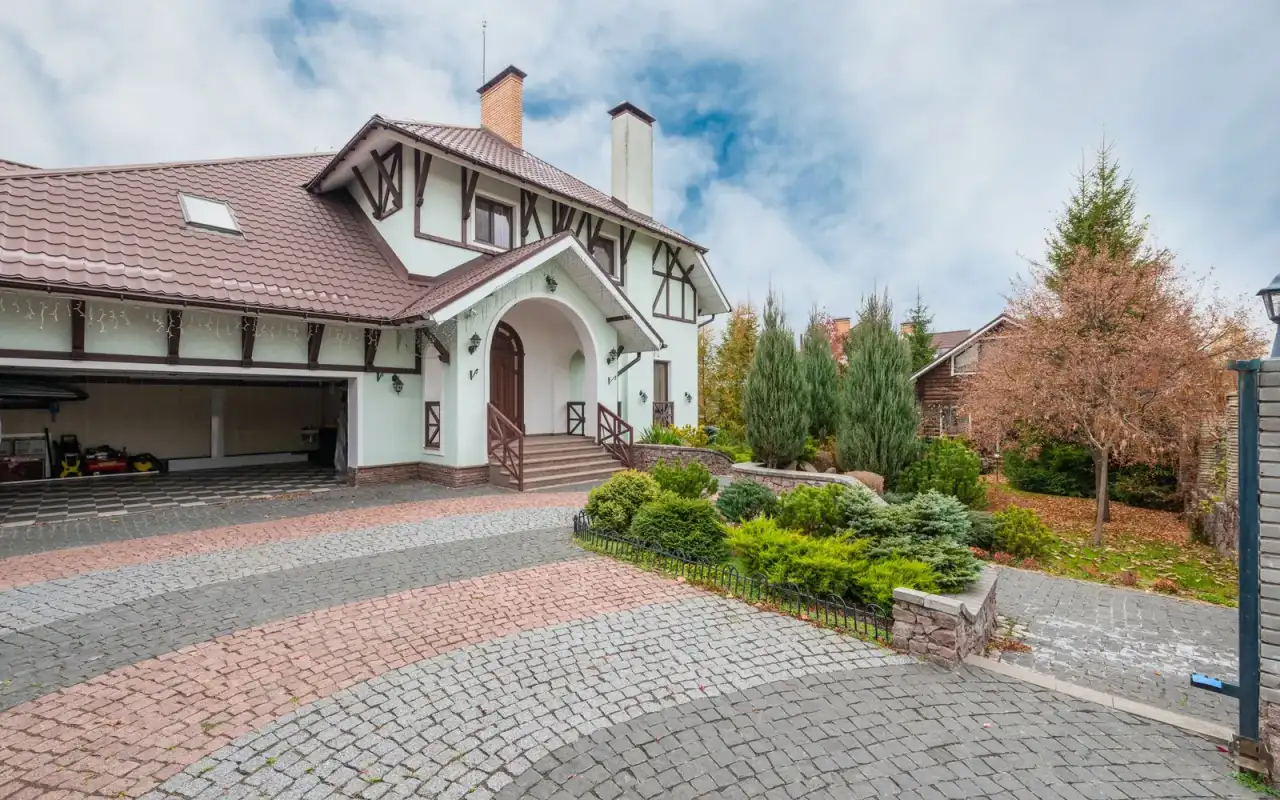
The license is about the strip, not the whole drive
Homeowners mix up two surfaces that share a tire path. The part on your lot is private. The part between your property line and the public road is the strip the city controls. Daytona Beach will consider pavers in that strip, and it does so with a written license the owner records. The license is a permission that can be undone. It is not a gift of the land. If the city later needs the strip for a pipe, a sidewalk, or a road repair, the owner pays to take the pavers out and to put the strip back.
The same license puts ordinary upkeep on the owner: the field has to stay safe, and joint sand that washes out is the owner's bill, not a city work order. Re-sanding after a summer storm is maintenance under that deal. A patio behind a fence never triggers it. A flare that sneaks past the sidewalk does. Walk the edge with a survey before you tell an installer the job is 'all on my property.'
What to collect before the apron is cut
The city's driveway-pavers application is a separate packet from a building permit that stays inside the lot. Read it next to the license, not instead of the license. Ask who records the license, who pays the clerk, and who keeps the recorded copy for the inspector. An installer can prepare drawings. The owner is the person the license binds. Do not sign a neighbor's copy because the two houses share a curb cut.
Beachside lots, often mailed as 32118, and mainland lots, often 32114, can both touch a city street. Western sections toward the LPGA corridor, often 32124, add long private drives where only the last few feet are the public strip. The license follows the strip, not the ZIP code. If your community also has an association, that approval is a third stack. LPGA International has its own page for the association step. Pelican Bay is named on the city's new-house checklist and is not covered here.
| Piece of the job | Paper | Who carries the duty |
|---|---|---|
| Pavers inside the lot | Whatever building permit the city requires for that scope | Owner and installer, per the contract |
| Pavers in the public strip | Driveway-pavers application plus recorded license | Owner maintains, re-sands, and removes if told |
| Association street, if any | That association's form | Owner, before a pallet is ordered |
How the private field should be quoted
Angi's 2026 article, updated October 15, 2026, puts a standard paver driveway at $10 to $18 per square foot and a wide size table at $10 to $30. Permeable is published at $15 to $25 and decorative at $18 to $30. Labor is published at $5 to $15 per square foot or $50 to $80 per hour. A 12 by 50 foot run is 600 square feet, about $6,000 to $10,800 on the standard band before the old slab leaves, or $6,000 to $18,000 on the wide table. Demolition is extra. Angi does not give one haul-away rate this site will repeat.
Sand is the local reason a cheap per-foot number fails. USDA's Myakka series is poorly drained fine sand, with the water table inside 18 inches for one to four months in a typical year. A base that is only a thin layer of screenings will rut in the tire path after the first wet season. Ask for compacted thickness, a separation fabric if the sand is loose, and an edge that will not creep into the lawn. Near the ocean, ask for an edge that will not rust. Those questions are the driveway. The color is the last decision.
Patterns, aprons, and the turn at the street
Where tires turn, a pattern that locks across the traffic is worth the extra cuts. A simple running bond is cheaper and spreads more easily at the radius. The public strip is a poor place to experiment: the license makes you remove whatever you install, so a complicated inset in the apron is a future bill. Keep the decorative band on the private side if you want it, and keep the strip simple enough to lift.
Salt on the peninsula is a sealer and metal problem, not a reason to skip the license. A glossy film can get slick when sea spray wets it. Many coastal jobs do better with a breathable product, applied after the white mineral haze on new concrete units has faded. That haze is common. It is not, by itself, a failed base. The sealing guide separates inland timing from beach timing.
Checklist for a Daytona Beach drive
- Mark the property line on the survey. Anything past it is the license conversation.
- Read the city's paver application and the license together. Budget recording, not just pavers.
- Put maintenance and a future removal in the quote as owner duties, because the license does.
- Name beachside, mainland, or the west side. Salt and driveway length are not the same quote.
- If an association exists, get its written answer before demolition. LPGA has a separate page.
- Ask for base thickness and fabric on sand. A color sample does not hold a tire.
- Use the calculator so two bids share one square footage, then keep the city's license fee outside that math.
Daytona Pavers is a free referral service. The person who builds the driveway is an independent installer, under a contract with you. We do not record the license and we do not employ a paving crew.
Last updated November 1, 2026.
Sources
- City of Daytona Beach, recorded license agreement for driveway pavers in the right of way
- City of Daytona Beach, driveway pavers in the public right-of-way application
- Angi, How Much Does a Paver Driveway Cost? (2026 data, updated Oct 15, 2026)
- Wikidata, Daytona Beach, Florida (Q490595)
- USDA official soil series description, Myakka series
Last checked November 1, 2026. Ranges are national or publisher typical figures, not quotes.
Parent pages
-
-
- Permit row Official links for this place in the permit guide.
- Cost calculator National published bands. Not a quote.
-
Daytona Beach driveway questions
Can a paver driveway cross into the Daytona Beach right of way?
Yes, if you use the city's driveway-pavers application and record the license agreement. The owner maintains the pavers and pays to remove them if the city needs the strip. Confirm the current forms before you cut.
Does the license cover pavers that stay inside the lot?
No. The license is for the public strip. Work that never crosses the property line is a different question for the building desk, and for your association if you have one.
What does a 600 square foot drive cost to plan?
On Angi's 2026 standard band of $10 to $18 per square foot, about $6,000 to $10,800 before haul-away. The wide table of $10 to $30 is $6,000 to $18,000. Last checked November 1, 2026. Not a quote.
Who records the license?
The owner is the party the license binds. Ask the installer and the city who walks it to the clerk and who pays that fee. Do not assume it is included because the paver price looked complete.
Is the county hold harmless the same document?
No. Unincorporated Volusia uses a county use permit and a different owner release. A Daytona Beach street uses the city license. Match the paper to the city on the parcel.
Are you the driveway contractor?
No. Daytona Pavers introduces an independent installer. You decide whether to hire them. There is no charge from us for the introduction.
Request a Daytona Beach driveway quote
Daytona Pavers is a free service that connects homeowners with local, independent paver installers. It is not itself the contractor. Your request is shared with a local installer so they can contact you with a quote.
Tell us about the project. We pass the request to a local, independent installer. You do not pay Daytona Pavers for the introduction, and you decide whether to hire anyone.
A budget range is optional. It is a planning hint, not a promise. Read how we handle this information on the privacy page.